Alumni Spotlight: Allegra Favila
Alumni Spotlight: Allegra Favila
Meet Allegra Favila, BA HIAA ‘14
.JPG)
Exhibitions and Publications Manager at the Grey Art Museum at New York University
“As Exhibitions and Publications Manager at the Grey Art Museum…
I manage the production of art exhibitions and scholarly publications from start to finish, utilizing my strong project management and writing skills to bring art historical scholarship to both the NYU community and a broader public audience. As part of a small but mighty team of nine full-time administrators and many dedicated part-time student workers, I have the opportunity to work in many areas of museum administration. For museum exhibitions, I serve as the primary contact for curatorial matters, including checklist development and loan administration; oversee exhibition design; and serve as co-lead on the development and production of exhibition object labels and other interpretive text.
I also represent a publications department of one, overseeing the manuscripts, rights and reproductions, and design of all scholarly publications. I work closely with graphic designers, burgeoning and established scholars, copyeditors, and copyright specialists to produce a wide variety of publications, from co-published exhibition catalogues to free exhibition booklets and other ephemeral published material. Related responsibilities I have include management of the museum website, consulting on press outreach and branding, and institutional archives management.
I was inspired to study archival practice when…
I was 17, and purchased a copy of Christopher Maurer’s Sebastian's Arrows: Letters and Mementos of Salvador Dalí and Federico García Lorca. Reproducing a selection of letters, texts, and images, the book illuminates the intimate friendship and creative partnership between two major artistic figures in 20th-century Europe. This was my first experience of how archival materials—specifically, publishing and providing public access to such materials—can not only expand one’s knowledge but also create a greater sense of intimacy between oneself and a historical person, place, or event.
As a senior at Brown…
I ended up writing an honors thesis discussing eschatological themes and apocalypse motifs in the work of Dalí. After graduation, I briefly worked as an archives assistant within the Special Collections housed at Brown’s John Hay Library, where I helped create a finding aid for a personal papers collection and first learned how to write archival descriptions.
Years later, at the Grey, I began delving into the museum’s institutional archives in my first role as Assistant to the Director and Press Officer—while most of the museum's records are stewarded by University Archives, the museum maintains some three hundred exhibition archive binders that represent the museum’s fifty-year exhibition history. I would reference these binders to answer infrequent (but precious!) inquiries from scholars, students, filmmakers, journalists, and colleagues about past exhibitions. Given my interests and the fact that the museum has no archivist on staff, it made sense for me to earn a degree in archives and public history using the tuition benefit afforded to me by NYU. I had a wonderful experience under Ellen Noonan, director of the program, who stood by me for 4.5 years as I completed the program on a part-time basis and maintained my full-time job!
I would like to highlight…
Make Way for Berthe Weill: Art Dealer of the Parisian Avant-Garde, that was on view at the Grey Art Museum through March 1, 2025, which was a traveling exhibition ten years in the making. It surveyed the groundbreaking career of the first woman modern art dealer, Berthe Weill (1865–1951). Largely left out of historical accounts of early 20th-century modernism, the exhibition introduced visitors to Weill as a Jewish woman who fought against sexism, antisemitism, and economic struggles in her quest to promote emerging artists. One of the highlights of the exhibition at the Grey, in my opinion, was a graphic timeline of Weill’s life. The project was a tripartite collaboration between the Grey, the Montreal Museum of Fine Arts, and the Musée de l’Orangerie (where the show is on view through January 26, 2026). Earlier this year, I was part of a panel and Q&A with Grey staff about the intellectual and practical dimensions of this collaboration, for an audience of graduate students studying art history and the art market.
The Grey’s original exhibition Anonymous Was A Woman: The First 25 Years, and the accompanying publication of the same name, was also several years in the making. The project invited reflection on a quarter century of artistic achievement tied to the Anonymous Was A Woman (AWAW) grant program, which, since 1996, has supported women artists over the age of 40 with unrestricted awards. While the exhibition featured a selection of awardees, the publication commemorates all 251 recipients of the award from 1996 through 2020, offering a visual and critical account of their work and careers. This book was my first major art history publication that I oversaw from start to finish and so holds a special place in my heart—as do the over 200 artists I corresponded with on occasion of the project!
My advice for undergraduates interested in a career in art history…
is to hone your writing skills with different kinds of readers in mind. Since I’ve worked at NYU, my writing skills have continued to improve exponentially as I’ve written exhibition press releases for journalists and art critics, exhibition object labels for members of the general public, grant applications for arts and non-profit professionals, and more.
Show breadth in your writing skills!"
PURCHASE the "Anonymous Was A Woman, The First 25 Years" Publication
LEARN MORE about the “Anonymous Was A Woman, The First 25 Years” Exhibition
LEARN MORE about the "Make Way for Berthe Weill" Exhibition
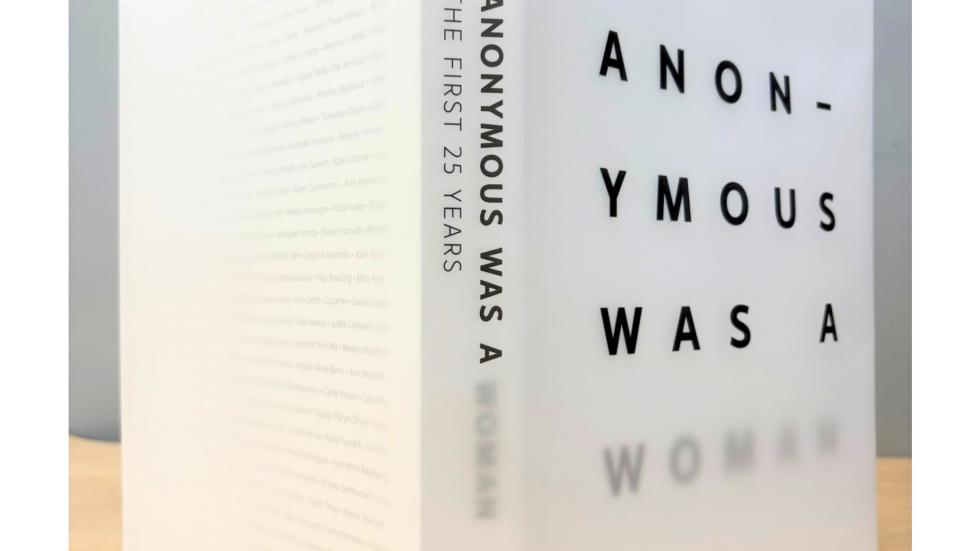
Exhibition catalogue for "Anonymous Was A Woman, the First 25 Years"
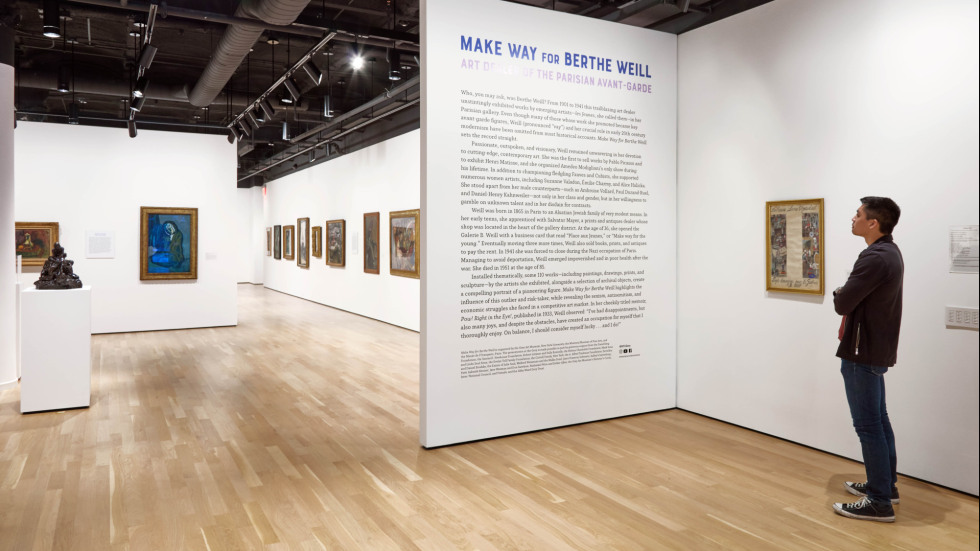
"Make Way for Berthe Weill" exhibition view, photo by Simon Cherry
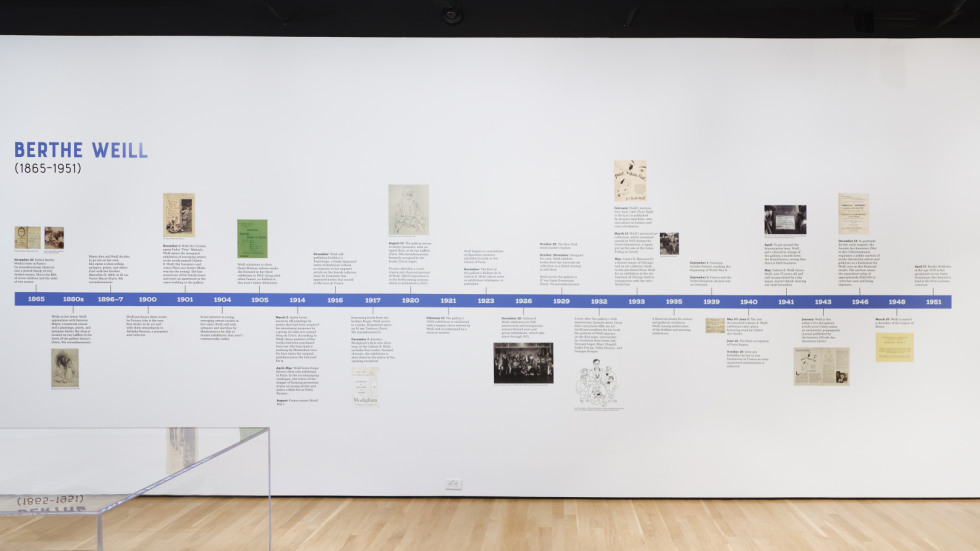
"Make Way for Berthe Weill" exhibition timeline, photo by Simon Cherry
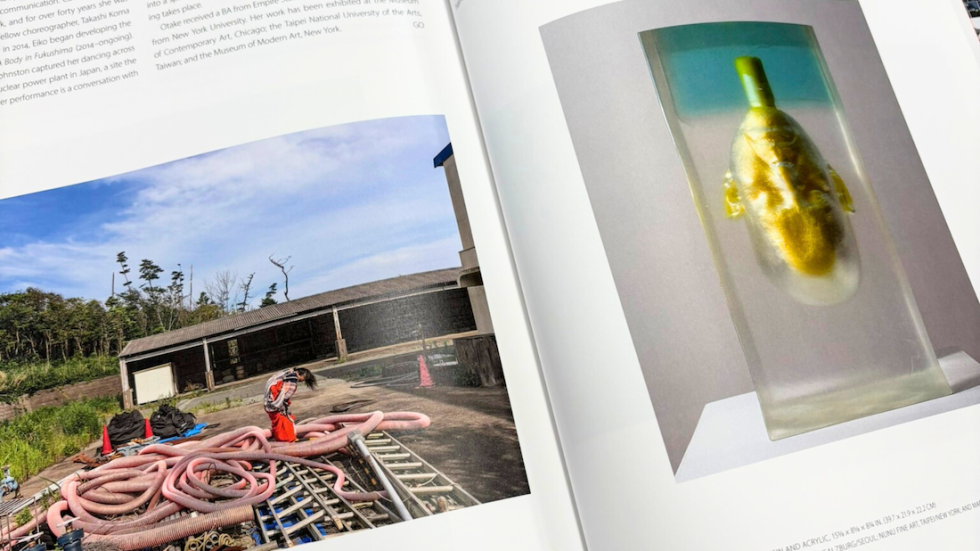
Interior pages, exhibition catalogue for "Anonymous Was A Woman, the First 25 Years"