Between World’s Fairs, (Post)Colonial Archaeologies and UNESCO World Heritage: Angkor Wat’s Transcultural Circles of Impression
Michael Falser, Architectural Historian at Heidelberg University, Germany
October 21, 2025 6 pm, Rhode Island Hall, Joukowsky Building.jpg)
The 12-century temple of Angkor Wat in Cambodia is without a doubt one of the world’s most impressive religious stone monuments and a milestone in the architectural history of Southeast Asia. And while the temple became the centerpiece of the UNESCO World Heritage site of Archaeological Park of Angkor in 1992 and is today threatened by global mass tourism, the temple’s modern history as a global heritage icon is a methodological challenge. Falser led us on a global journey, with insights from his monograph Angkor Wat: A Transcultural History of Heritage (DeGruyter, Berlin 2020) which mapped out the multiple lives of Angkor Wat from the 1860s to the 2010s and presented a kind of visual anthology of the temple. The concept of “impression” was discussed along visual, technical, physical and aesthetic perspectives.
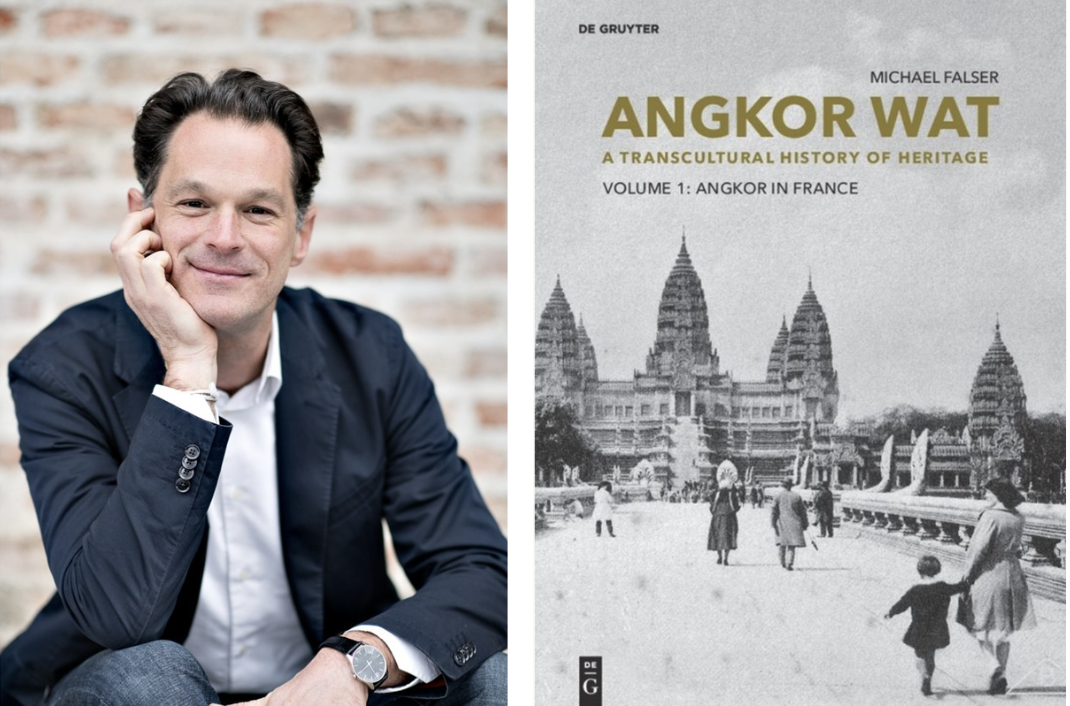
About Michael Falser
Michael Falser studied architecture and art history at the universities of Vienna, Paris and Berlin. Besides his activities as historic preservation architect and World heritage consultant for UNESCO and ICOMOS International, his long-standing research and teaching focus is in the combined field of global architectural history and cultural heritage studies.
Between 2009 and 2017 he worked in the Cluster of Excellence "Asia and Europe in a Global Context: The Dynamics of Transculturality” at Heidelberg University in Germany. Along with visiting professorships at the universities of Vienna, Kyoto, Bordeaux, Paris-Sorbonne, Heidelberg and lately Ottawa, he conducted, between 2020 and 2024 a German Research Foundation-funded research project at the Institute of Architectural History at Technical University of Munich, investigating German-colonial architecture as a global project around 1900 and as a transcultural heritage today. While he is still teaching at the Institute of Art History at Heidelberg University, he is, since 2025, head of the Research Institute of the Technisches Museum Wien (Vienna Museum of Science and Technology, Vienna/Austria).
This lecture series is made possible through the generous support of:
The Marshall Woods Lectureship Foundation of Fine Arts and The Anita Glass Fund