Archaeology and the Ever-changing Cityscape of Anyang: Craft Production, Spatial Organization, and Infrastructure of the Late Shang Dynasty Capital
Yung-Ti Li, Professor of East Asian Languages and Civilizations at the University of Chicago
April 22, 2026 6:00 pm, List 110
FREE AND OPEN TO THE PUBLIC
REGISTER
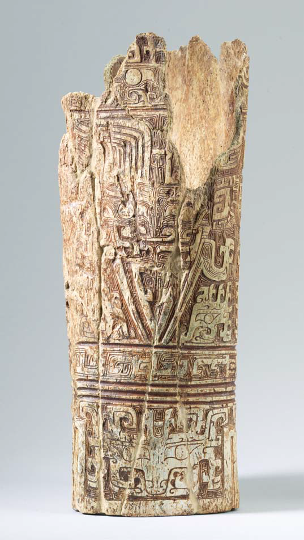 Anyang, or Yinxu, the Ruins of Yin, is one of the most important archaeological sites in China. The first excavation of Anyang in 1928 marked the commencement of systematic archaeological investigations at the site and the beginning of the discipline of archaeology in China. Subsequent discoveries of inscribed oracle bones, the palace-temple complex, and the royal cemetery quickly gained domestic and international attention. With the unveiling of the material culture of the historic Shang dynasty, China now had physical evidence of its own ancient civilization.
Anyang has been excavated and investigated with only rare interruptions for almost a century. With the centennial anniversary of the Anyang excavations approaching, and with the recent groundbreaking discoveries made in the field, it is both essential and illuminating to review the development of Anyang archaeology by comparing the work conducted by the first-generation Anyang archaeologists and the current understanding of the site. This presentation will therefore examine Anyang not only as the Shang dynasty capital as recorded in historiography, but also in the context of an ancient metropolis in terms of craft production, spatial organization of cemeteries and residential compounds, and the newly discovered infrastructure of the urban center.
REGISTER
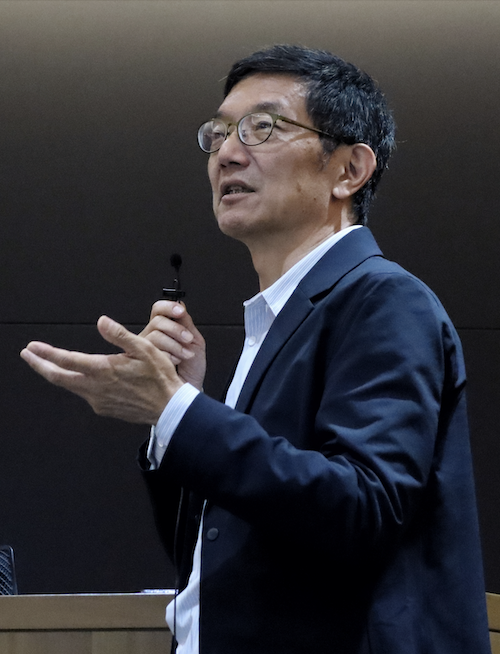 About Yung-Ti Li
Yung-Ti Li’s research interests focus on the archeology of Bronze Age China, including topics in craft specialization and production, especially section-mold casting technology, and the rise of social complexity, inter-regional interaction, and state formation in ancient China. His current work encompasses the study of state-sponsored craft production at Anyang of the Shang period, and bronze production at Houma of the Eastern Zhou period. He is currently running a joint field project at the Bronze Age site of Panlongcheng, Wuhan, China with Wuhan University, and is in the process of setting up projects in Xiangfen, Shanxi, China. Other initiatives include lab research on bone, lithic and bronze workshop remains from Anyang and other Bronze Age sites, and research on archaeological materials excavated in the 1930s by the Institute of History and Philology, Academia Sinica, Taiwan.
Li is the editor of Archaeologia Sinica Number Four: Ta Ssu K’ung Ts’un (Settlement and Cemeteries of the Yin-Shang and Eastern Chou Periods at Anyang, Honan; Gems of Yinxu: Catalogue of Selected Artifacts from Anyang in the Institute of History and Philology; and Historic Photos of the IHP Anyang Excavations: 1928-1937). His most recent book is titled Kingly Crafts: The Archaeology of Craft Production in Late Shang China, published by Columbia University Press in 2022. His scholarly work has been supported by grants and funding from the Chiang Ching-kuo Foundation, the Henry Luce Foundation/American Council of Learned Societies, as well as the National Science Council of Taiwan.
Li received a BA from the Department of Chinese Literature at National Sun Yat-Sen University in Taiwan. He earned master’s and doctoral degrees in anthropology from the University of Arizona and Harvard University, respectively.
This lecture series is made possible through the generous support of:
The Marshall Woods Lectureship Foundation of Fine Arts and The Anita Glass Fund