'No Small Ostentation': Rituals of Collection and Display in Urbanite Trousseaus of the Eighteenth-Century Ottoman Empire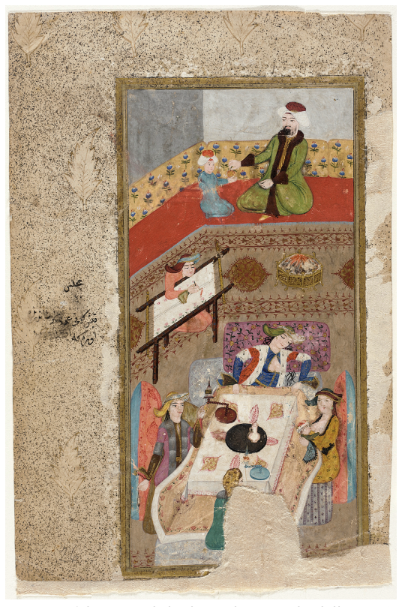
Congratulations to Gwendolyn Collaço, the Anne S.K. Brown Curator for Military & Society at the John Hay Library and HIAA affiliated faculty member, for receiving the 2026 Article Prize from the Ottoman and Turkish Studies Association!
Her article “No Small Ostentation”: Rituals of Collection and Display in Urbanite Trousseaus of the Eighteenth-Century Ottoman Empire, offers a socio-economic, aesthetic, and affective history of eighteenth-century Ottoman urban life through the lens of curated objects. Bringing together an impressive range of research materials, comprising paintings, marriage contracts, legal cases, poetry, and narrative accounts, she reconstructs the journey of a wedding trousseau from the construction and assembly of its constitutive elements to their display. The objects from urbanite trousseaus emerge not simply as precious and private histories of families, shut in chests and admired, but as a social, economic, and artistic display of the intimate lives of urbanite families.
Particularly compelling is the article’s attention to women’s agency in these urban rituals and to the ways in which women across ethnic and religious divides participate in curating these displays. Rather than focusing on royal families, the article turns our attention to urbanite women and offers a cosmopolitan narrative of displaying wealth and women’s agency by demonstrating the differences and divergences in curating the display. In doing so, the article makes both a historiographical and methodological intervention: it shifts the focus from the royal family to the everyday life of the urban elite, while suggesting a new archive through which to approach Ottoman social history.
Collaço's interdisciplinary narrative, mobilizing art history, literature, and museum studies, further allows the trousseau to become an archive of eighteenth-century Ottoman urban life. What emerges is not simply a history of objects, but a history of women, families, wealth, aesthetics, and affect across ethnic and religious backgrounds. For this reason, the Ottoman and Turkish Studies Association believed that the article delivers an important contribution beyond Ottoman art history, adding that it should speak to scholars across a wide range of fields, especially all those interested in the relationship between art history and women’s history.
Image credit: Painting of a domestic scene, mid-eighteenth century. Ink, opaque watercolor, and gold on paper, 11 ½ × 7 7/8 in. (29.21 × 20 cm). Los Angeles County Museum of Art, Madina Collection of Islamic Art, gift of Camilla Chandler Frost, inv. no. M.2002.1.660. (Photo: © Museum Associates/LACMA)