"Odi profanum vulgus et arceo: Hostile Design in Ancient Rome"
Thursday, November 19, 6:00 pm List 110
Penelope Davies, Professor at the University of Texas at Austin, explores "hostile design" visible in the public architecture of Rome in the late Republic and Empire.
Co-hosted by the History of Art and Architecture and the Classics departments
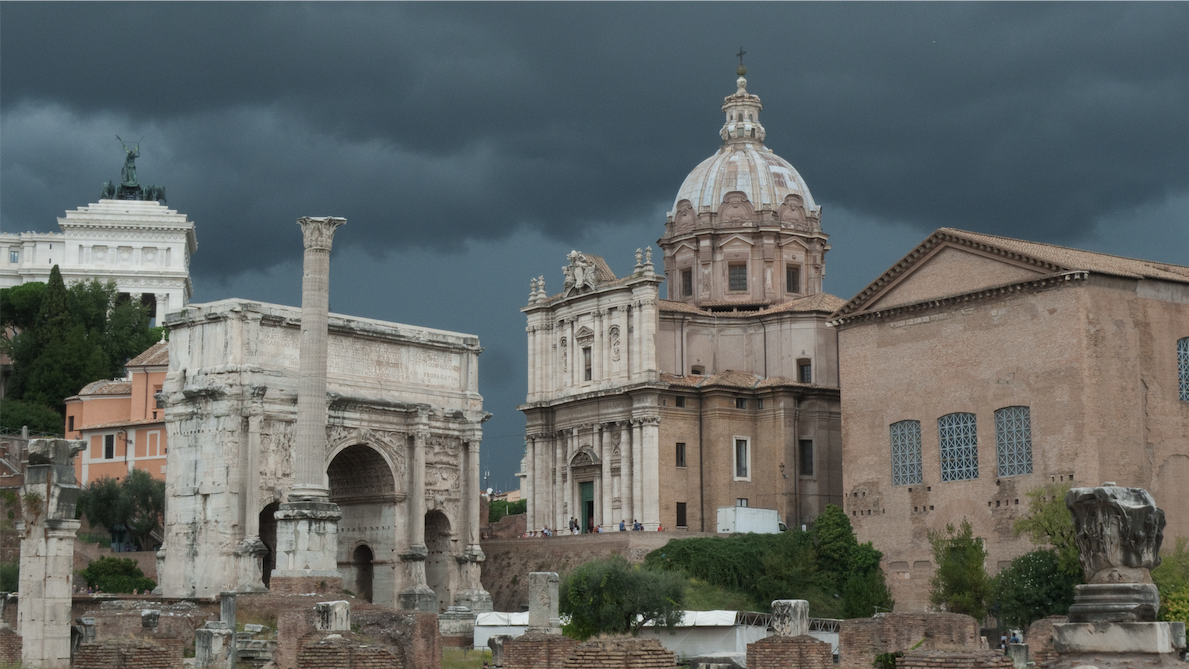
Odi profanum vulgus et arceo: Hostile Design in Ancient Rome
Penelope Davies
Professor at the University of Texas at Austin and Hedda Andersson Professor at Lund University, Sweden
Thursday, November 19, 2026 6:00 pm List 110 REGISTER
Hostile design describes objects of public, semi-public and semi-private spaces that combine social control and interaction design to discourage or prevent usages typical to targeted populations, usually without the authorities’ explicit presence. Recognising that all design processes are, in one way or another, ideological, and that, by their very nature, imposing spaces and monuments are simultaneously enticing to some and hostile to others, this paper draws on contemporary urban criticism and policy to explore degrees and types of less perceptible hostilities embedded in the public architecture of Rome in the late Republic and Empire. In doing so, it aims to reveal and decode power structures beyond pure surveillance, which might make us rethink traditional views on ancient Roman urbanism.
 About Penelope Davies
Penelope J. E. Davies is a Professor at the University of Texas at Austin, and Hedda Andersson Professor at Lund University, where she also holds an honorary doctorate. She is the author of Death and the Emperor (CUP 2000), Architecture and Politics in Republican Rome (CUP 2017), and articles and essays in scholarly publications. Her co-edited Cambridge Urban History of Rome: Volume One,
Antiquity, was published in 2025. Her current book project focuses on hostile design in ancient Rome.
This lecture is co-hosted by the History of Art and Architecture and Classics departments.