History of Art and Architecture
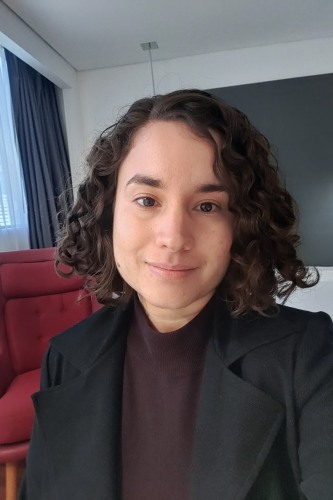
Celia Rodríguez Tejuca
Postdoctoral Research Associate in History of Art and Architecture, under the auspices of the Presidential Postdoctoral Fellowship Program
Biography
Celia Rodríguez Tejuca is a Presidential Postdoctoral Fellow in the Department of the History of Art and Architecture, specializing in the art of the early modern Spanish Empire, with a particular research focus on visual scientific cultures, collecting, print culture, and critical bibliography. She received her PhD in History of Art from Johns Hopkins University in 2025, her MA from the University of Massachusetts Amherst in 2019, and her BA, summa cum laude, from the University of Havana, Cuba, in 2015.
Her current book project aims to historicize epistemic images produced across the eighteenth-century Spanish Empire through scientific initiatives that foregrounded the situated knowledge of colonial actors. By analyzing objects created in Manila, Havana, Mexico City, Huancavelica, and other sites, the book explores how locally conceived scientific artifacts functioned within colonial, imperial, and trans-imperial registers of sociability, assessing their role in the broader Enlightenment project. The book grows out of her doctoral dissertation, From the Ground Up: Picturing Scientific Knowledge in the Late Eighteenth-Century Spanish Americas, which received an Honorable Mention for the Maureen Ahern Doctoral Dissertation Award in Colonial Studies from the Latin American Studies Association (LASA). This research has also benefited from the support of prestigious institutions, including a 2023–2025 Andrew W. Mellon Predoctoral Fellowship at the Center for Advanced Study in the Visual Arts (National Gallery of Art), a semester-long fellowship at the John Carter Brown Library, a Dibner Research Fellowship in the History of Science and Technology at The Huntington Library, and a Lapidus–Omohundro Institute Fellowship in Early American and Transatlantic Print Culture, among others.
In parallel with her work in colonial visual culture, Rodríguez Tejuca has maintained a longstanding engagement with film studies, with an emphasis on Cuban revolutionary cinema, political iconography, and postcolonial visual narratives. She previously served as chief editor of Cine Cubano, the official journal of the Cuban Institute of Cinematographic Art and Industry (ICAIC), where she also curated programs for Muestra Joven ICAIC, Cuba’s premier festival for emerging filmmakers. She has recently collaborated with the Latin American and Iberian Film Festival at Yale (LIFFY) and the Southside Cultural Center of Rhode Island as she continues to advocate for greater visibility of cinema produced by the Cuban diaspora and the broader Caribbean.